


Exhausted, foggy, heavy? Here’s where Dr Libby would start.
Emily thought she was just tired. Not dramatically unwell. Not “burnt out”. Just stretched thin in the way so many women are. She was juggling long workdays, raising small children, endless mental tabs open in her mind and the constant feeling that there was always something else that needed her attention. Breakfast was often rushed or skipped, lunch happened whenever she could squeeze it in and most afternoons involved another coffee just to get through the school pick-up and dinner routine.
At first, the symptoms felt explainable. The exhaustion, the brain fog, the heaviness in her body, the growing sense that even simple tasks required more effort than they once had.
She told herself it was just a busy season. But over time, Emily stopped feeling like herself entirely. Workouts that once energised her started leaving her depleted, so much so she rarely exercised now. She struggled to focus in meetings. She felt flat emotionally and increasingly overwhelmed by things she would normally take in her stride.
And despite sleeping more, she never truly felt restored.
Feeling exhausted may be common. That doesn’t mean it’s normal.
Dr Libby often says symptoms are messages. Rather than dismissing fatigue as “just life”, she would want to understand what might be driving it beneath the surface.
Sometimes it’s as simple as correcting one small nutrient deficiency. Other times, multiple systems are speaking at once.
Where Dr Libby would begin
Iron status
One of the first places she may explore is nutritional status, particularly iron. Because while many people associate iron deficiency with simply feeling tired, iron influences far more than energy alone. Iron helps carry oxygen throughout the body. Every cell relies on oxygen to produce energy effectively, including those in your brain and muscles. Iron is also essential for the production of neurotransmitters, including dopamine for motivation and GABA for it calming, anti-anxiety effects.
When iron levels are low, people can experience symptoms such as:
- fatigue or exhaustion
- brain fog or poor concentration
- feeling flat or unmotivated
- anxiety
- a feeling like you are stuck in ‘red alert’
- reduced exercise tolerance
- dizziness or breathlessness
- heart palpitations
- disrupted sleep
- feeling cold easily
- struggling to cope with everyday demands
And for menstruating women, low iron is incredibly common. Heavy periods, stress, restrictive eating or ‘coffee for lunch’, digestive issues, infections, pregnancy, multiple bleeds per month which can be common in perimenopause and the increased nutritional demands of modern life can all contribute to depleted iron stores over time.
One of the challenges with low iron is that it usually develops quite slowly (unless there is significant blood loss). There’s no dramatic change overnight and so many women quietly adapt. They stop exercising because they feel too exhausted, rely more heavily on caffeine, assume their brain fog is stress and normalise feeling flat, anxious, overwhelmed or depleted. The body quietly compensates – until it can’t.
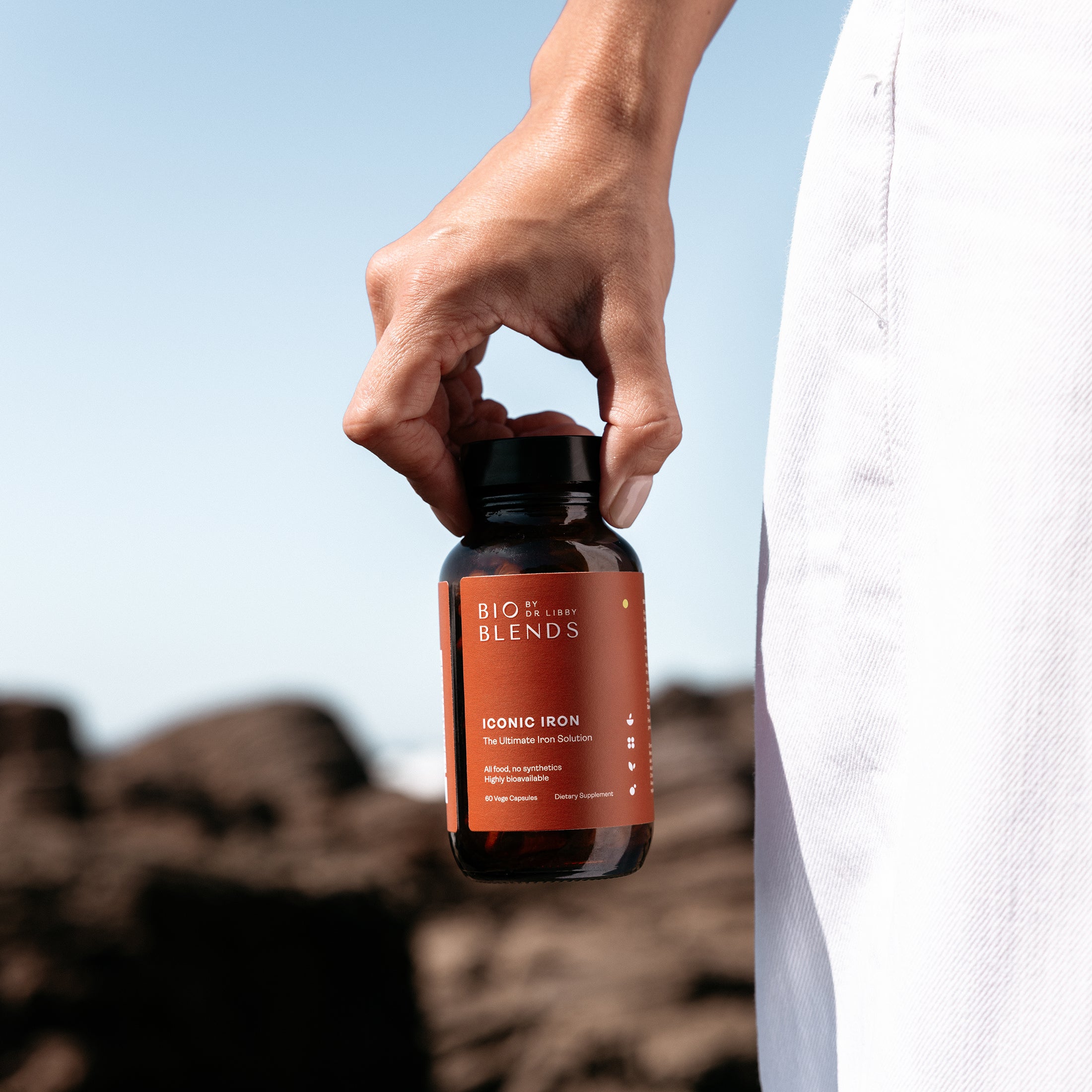
Iconic Iron was formulated using a ground-breaking form of iron called ferritin-iron sourced from organic peas, paired with sesame-derived copper to support iron utilisation. Ferritin-iron is made up of thousands of iron atoms naturally enclosed within a protective protein structure (the cage is called ferritin). This protects both the iron and also your gut cells from being exposed to free iron, unlike conventional iron supplements. The concerns with the free iron exposure that comes with old-school iron supplements are inflammation and oxidative stress which can drive gut-related side effects. Iconic Iron’s unique absorption mechanism alongside the protection of gut cells from exposure to free iron, mean there are no side effects and the usual absorption hurdles are overcome.
For many people, one to two capsules daily can offer highly bioavailable, gentle on the gut, foundational support for healthy iron levels, depending on life stage and individual needs.
Micronourishment
The minimum recommended intake of vegetables is five serves, yet less than 10% of the Australian and New Zealand population consume this amount consistently. Many people are trying to run high-demand lives while undernourished at a cellular level. Food is often eaten quickly, skipped entirely or built around convenience rather than nourishment. Over time, this can leave the body lacking many of the micronutrients required for energy production, nervous system regulation and resilience.
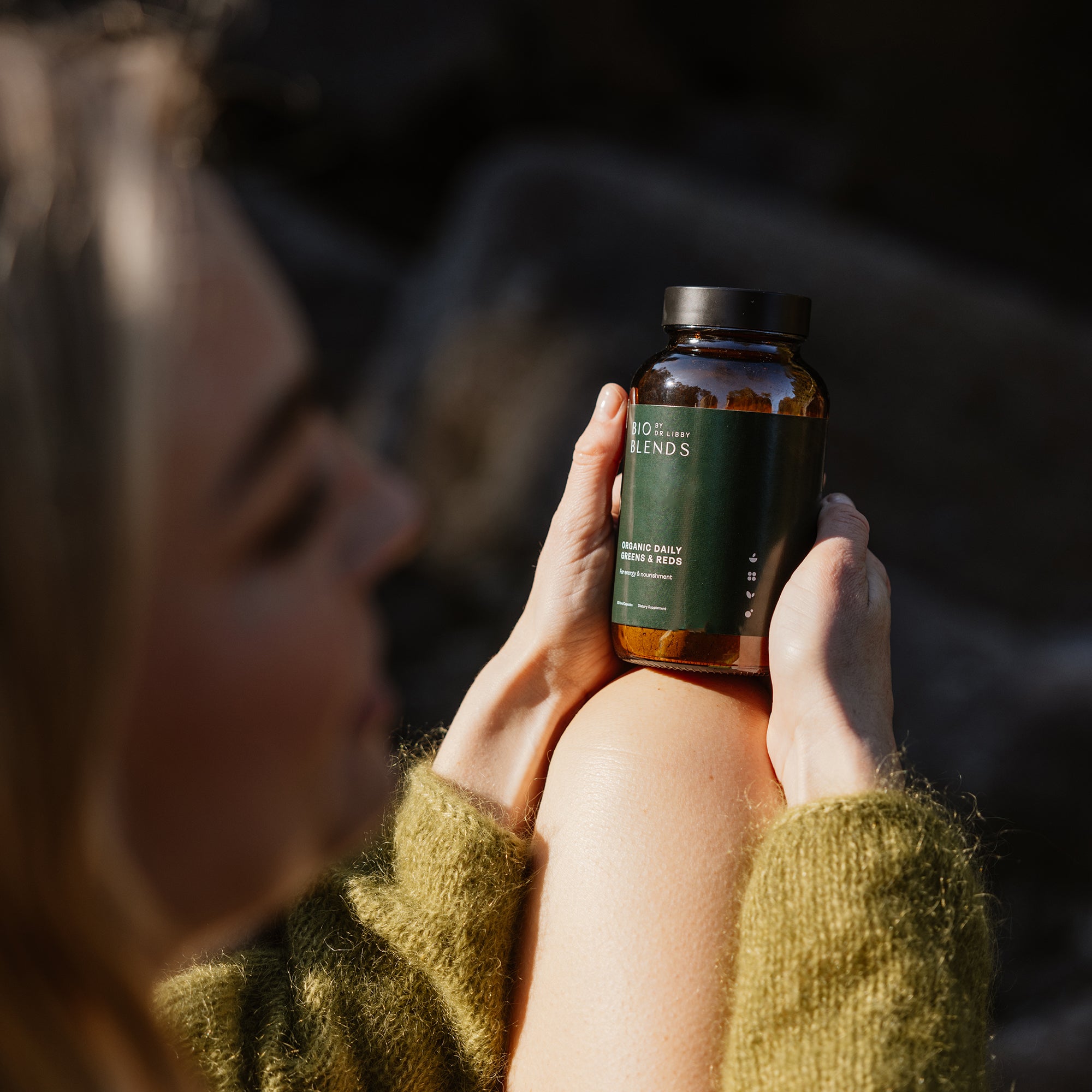
Dr Libby frequently speaks about the importance of micronourishment – the vitamins, minerals, polyphenols and the unique compounds found in food (real food, not junk) that help the body function optimally every day. Organic Daily Greens & Reds was created to help bridge some of those nutritional gaps using six concentrated wholefood ingredients including broccoli, beetroot, wheat grass, barley grass, dandelion and whole blackcurrants. Rather than acting as a stimulant, one teaspoon a day supports the body with nutrients that underpin sustained energy and wellbeing.
Stress physiology
When we live in a near-constant state of pressure and urgency, it can alter appetite, digestion, sleep quality and nutrient demands. Stress can also shape perception itself, making life feel harder, heavier and more effortful.
Dr Libby often explains that it’s not only the events in our lives that influence stress physiology, but our perception of those events. Two people can experience the exact same situation and have very different physiological responses to it.
Thought patterns such as “I have to do everything myself”, “I can’t let anyone down” or “there’s never enough time” can keep the nervous system in a prolonged state of alertness, even during moments of rest.
Over time, this can influence energy production, blood sugar regulation, digestion, hormonal health, emotional resilience and overall wellbeing. The body begins prioritising survival over restoration. This is where nervous system support can become incredibly valuable. Calm Restore was formulated with ingredients including ashwagandha (withania), magnolia, ziziphus, lemon balm and chamomile to help support a calmer stress response, soothe the nervous system and restore a greater sense of ease and resilience in the body.
The bigger picture
For women like Emily, exhaustion is not a sign of laziness or lack of motivation. It’s information. Information that the body may need deeper support: more nourishment, more restoration, more resilience, more care.
Sometimes that begins with iron. Sometimes with nervous system support. Sometimes it starts with simply recognising that feeling depleted all the time is not something you have to normalise. Because while exhaustion may be common, it’s not something you need to continue to live with and thriving again is entirely possible