
Supporting your skin through menopause: inside & out
Your skin, the body’s largest organ, evolves with you throughout life. It serves as a protective barrier against the elements, helps regulate temperature and plays a vital role in absorption and elimination—acting as a bridge between your internal and external environments. If we are privileged enough to experience the gift of ageing, our skin gradually changes. Some notice it after an extended challenging time, others don’t focus on it, while others still might notice changes during or after their menopause transition. While this is a natural process to be respected, it’s also one we can support, both internally and externally.
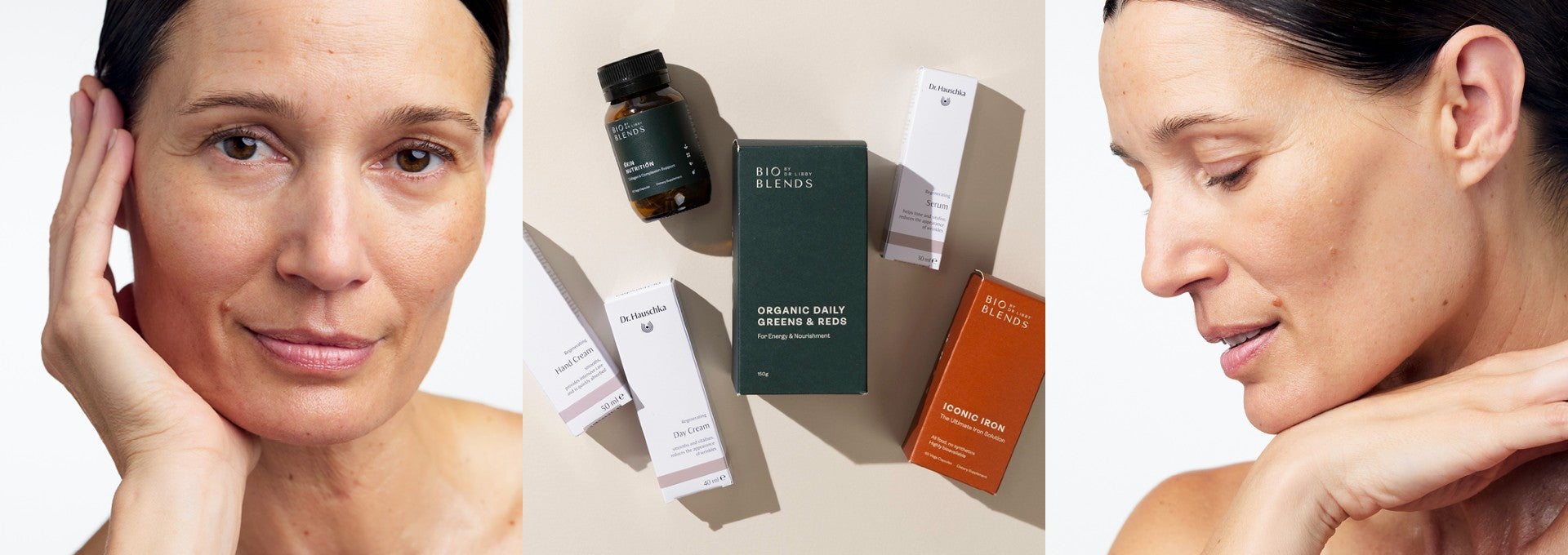
To help you support your skin through this transition, we have partnered with the skincare team at Dr. Hauschka to create a considered guide that brings these elements together. Dr. Hauschka has long been recognised for its holistic approach to skincare, one that views the skin not as something to be corrected, but as a living, intelligent organ to be supported. Rather than relying on harsh actives or quick fixes, their formulations are designed to work in harmony with the skin’s natural rhythms, helping to restore balance, strengthen the barrier and support its own processes of renewal.
In many ways, this mirrors our approach at Bio Blends. Just as we prioritise nutrients sourced from food, in forms the body can recognise and utilise, Dr. Hauschka focuses on biodynamically grown plant-based ingredients and thoughtfully crafted formulations that the skin can respond to with gratitude and ease. With that in mind, let’s explore some of the most common questions around supporting your skin through menopause.
How does menopause affect the skin?
It’s important to know that not everyone reports skin changes as a result of their menopause transition, while others do. It is vital we make space for all experiences. Skin knowledge is helpful, though, regardless of whether you’re noticing changes or not.
Alongside its other functions, estrogen plays a role in maintaining collagen and elastin, helping the skin stay firm, hydrated and radiant. As menopause approaches, natural estrogen levels decline, which some women find leads to thinner, drier skin and the appearance of fine lines and wrinkles—especially around delicate areas like the eyes, lips and décolleté. Hormonal shifts can also contribute to the appearance of pigmentation or “age spots”, all of which are natural signs of the skin adapting over time. Shifts in the ratio between estrogen and testosterone may also trigger breakouts in some women. On the other hand, compared to earlier years when excess oil production often caused inflammation and breakouts, the skin can become more balanced over time, with improved harmony between sebum and moisture that helps support overall skin strength.
It’s important to recognise that the needs of mature skin are fundamentally different from those of younger skin. As we change, so does our skin. We can support the skin’s ability to firm, renew and retain vital moisture by nurturing the skin from within while also supporting it externally. It’s not about looking younger, but about feeling comfortable and confident in your own skin.
What changes to skincare and diet during menopause can be helpful?
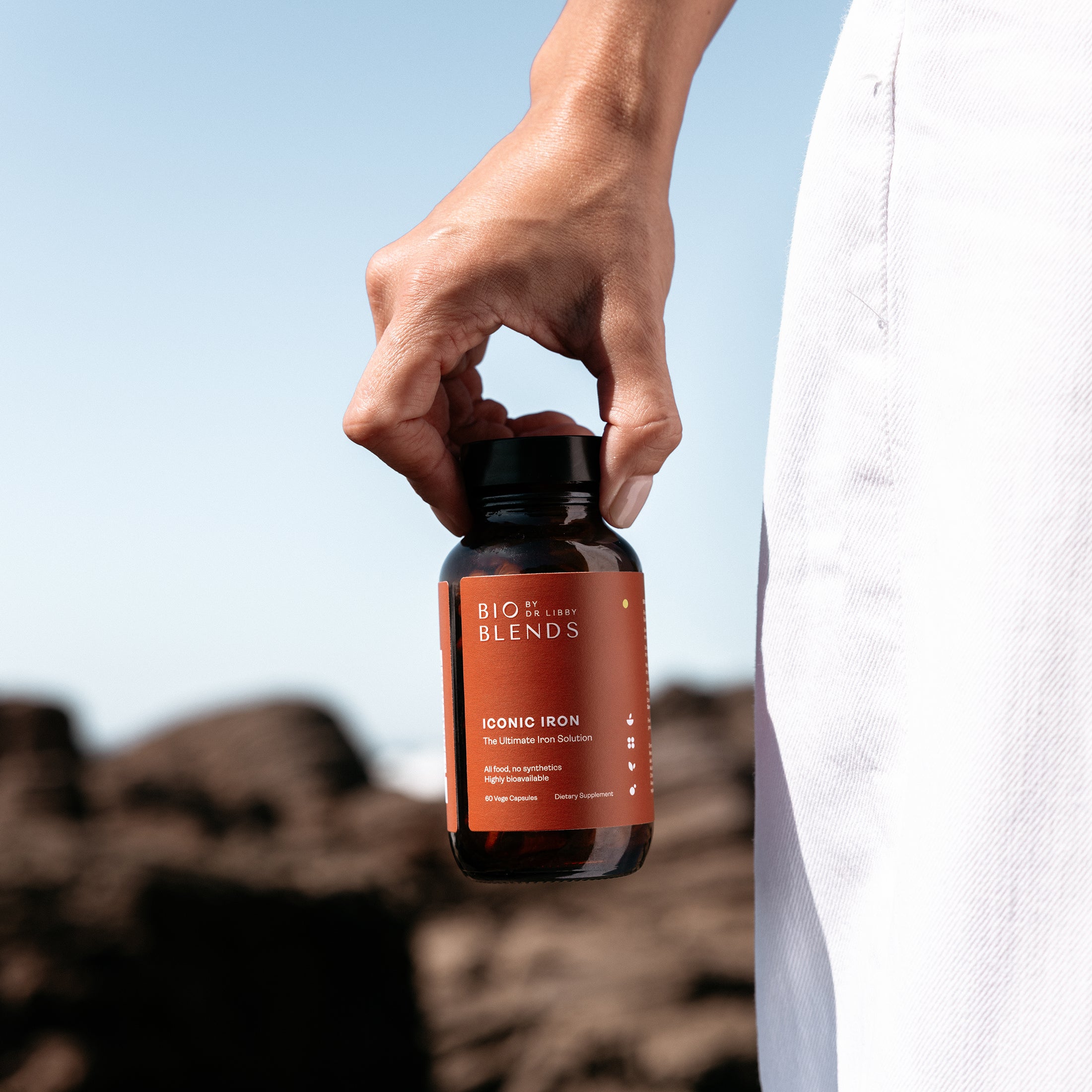
What you eat plays a direct role in how your skin looks and feels. To nourish the skin during menopause, prioritise adequate protein, the amino acids from which are essential building blocks for collagen production and maintaining skin structure. Essential fatty acids, found in foods like wild-caught oily fish, flaxseeds and walnuts, as well as fats in evening primrose oil, help support the skin barrier and keep skin hydrated. Vitamin C, zinc and iron are all key for collagen formation, wound healing and skin integrity. Include citrus, berries, kiwifruit and broccoli for vitamin C, pumpkin seeds, oysters, red meat and eggs for zinc and red meat, sardines, seaweed, parsley and kale for iron. Supplementation can also be helpful where there might be dietary shortfalls or additional support required. Iconic Iron contains a unique form of iron called ferritin-iron sourced from organic peas, which is highly bioavailable. Frequent spikes and crashes in your blood sugar can accelerate collagen breakdown and contribute to inflammation, so eat in a way that stabilises blood glucose.
In terms of skincare, you might feel your skin’s needs change during menopause—especially when it comes to cleansing. If your skin becomes more sensitive or if simply treating your skin with more consideration appeals, a gentle, considered routine can be highly beneficial. The learned team at Dr Hauschka encourage a focus on a two-step evening cleanse: start with the Dr. Hauschka Soothing Cleansing Milk. This is a soft milk-like cleanser with balancing anthyllis, jojoba and almond oil to effectively remove makeup, dirt particles and effects of pollution, allergens, pollen from our skin. Ensure to include the eyelids, eyebrows and around the eye sockets in your cleanse, the eyes can retain heat as a result of our day on computer/phone. When we bring a sense of cool and calm to our eyes and head, we too begin to feel calmer.
Follow with the Dr. Hauschka Cleansing Cream, a best-seller in the range with a creamy sweet almond meal, chamomile, apricot kernel oil and calendula. This gentle exfoliant encourages the shedding of dead skin cells whilst protecting the uppermost layer of the epidermis. This layer offers protection from pathogens and pollution. Once a week, you might like to add in a clay mask like Dr. Hauschka Clarifying Clay Mask, rich in loess clay and nasturtium. This treatment deeply cleanses pores, helps reduce visible redness and refreshes the skin. Finish with a splash of cool water to invigorate and tone.
What key ingredients/products help with menopausal skin concerns?
At Bio Blends, we understand that what shows up on the skin is a reflection of what is happening within. As estrogen naturally declines, so too can collagen production, hydration and the skin’s ability to repair, which is why supporting the skin during menopause is not only about what you apply, but also what you provide your body each day.
For women noticing changes in their skin, such as dryness, uneven tone, pigmentation or a loss of elasticity, this can be a sign that the skin is asking for deeper nourishment. The cells you see on the surface today were formed weeks ago beneath it, which means the support you give your body now directly shapes how your skin looks and feels in the weeks ahead.
Our Skin Nutrition formula was created with this in mind. It delivers a targeted blend of plant compounds and antioxidants, including grapeseed extract, gotu kola, acerola, guava leaf and melon for its superoxide dismutase, chosen to support collagen production and help prevent its breakdown, protect against cellular damage and enhance skin radiance. By providing the nutrients skin cells rely on as they are formed, it works to support strength, clarity and resilience from within.
At the same time, it can be helpful to recognise that if you are noticing skin changes during menopause, they can be being driven by broader hormonal shifts. Symptoms such as disrupted sleep, increased stress, hot flushes and low mood can all influence how the skin looks and feels, often exacerbating dryness, sensitivity and accelerated ageing.
This is where a formula like Bio Blends Meno Ease can play a supportive role. Designed for the later stages of perimenopause when periods have ceased and post-menopause, it combines herbs such as withania, shatavari, schisandra, saffron and black cohosh to support the body’s adaptation to lower estrogen levels. By helping to ease symptoms like hot flushes, support sleep quality and calm the nervous system, it addresses some of the underlying drivers that can impact skin health during this time.
For the outside, the proven botanicals in Dr. Hauschka’s Regenerating skincare range are carefully chosen to support maturing skin. This collection blends antioxidant-rich red clover and acerola berries with nourishing raspberry seed oil and shea butter to protect and encourage natural regeneration. Jojoba and avocado oils replenish and smooth, helping to soften fine lines and wrinkles. Kalanchoe and marshmallow help balance moisture and strengthen the skin’s resilience, while macadamia and argan oils provide deep hydration, protection and support for lasting moisture balance.
Which ingredients or products are best avoided, as they may contribute to or worsen menopausal skin concerns?
From a topical perspective, it’s best to avoid harsh or abrasive cleansers, including microdermabrasion treatments and glycolic peels, as they can cause long-term damage to the skin. Steer clear of products containing synthetic fragrances, colours and dyes, which can be particularly irritating during menopause when the skin tends to become thinner, more sensitive and in need of gentle, nourishing care. Aggressive treatments disrupt the skin’s natural balance and can accelerate premature aging. Instead, choose certified organic products—these botanicals and natural ingredients work in harmony with the skin, providing both nourishment and support for a healthier, more resilient complexion.
From an internal perspective, it’s less about avoiding a specific supplement or nutrient and more about recognising what may be placing additional strain on the body at a time when it is already adapting to significant change. Reduce or avoid highly refined sugars that can contribute to repeated spikes in blood glucose. Also consider if your caffeine, alcohol and highly processed food intake needs adjustment at this time.
Are there lifestyle changes that can help manage or prevent menopausal skin concerns?
It can be helpful to view menopause as a transition that invites women to slow down, tune into their bodies and honour the wisdom they have accumulated. Focus on strengthening the foundations for great health and energy—the daily habits that support the body through every life stage. Prioritise nourishing, whole foods that provide a broad spectrum of nutrients to support skin structure, repair and resilience. Deep, restorative sleep is another cornerstone. This is when the body carries out much of its repair work, including skin regeneration. It’s also important to support the body’s detoxification pathways, which play a role in hormone processing and overall metabolic health. When these systems are well supported, it can influence everything from skin clarity to hydration and tone.
Practices such as restorative yoga, mindful walks in nature, or quiet reflection help regulate the nervous system and create space for calm. This matters more than it might seem because, when the body is in a more relaxed state, it is better able to prioritise repair and regeneration. These lifestyle shifts directly impact the skin. When you slow down and support your body consistently, you create an internal environment where the skin can function at its best. As energy is restored and the body finds its rhythm, the skin often reflects this, appearing brighter, more resilient and more vibrant from within. And above all, live in touch with and in awe of the privilege of being alive.