



Caffeine, cortisol and the “fake energy” loop
If you’re reaching for coffee before you’ve even properly opened your eyes, please know you’re not alone. For many people, caffeine feels like the lifeline that keeps the day moving. But there’s a difference between having energy and borrowing it. And this is where caffeine, cortisol and what I call the “fake energy” loop come into play.
Let’s unpack what’s really happening.
Why caffeine feels so good (at first)
Caffeine works by binding to adenosine receptors in the brain, blocking adenosine (a calming neurotransmitter) from binding. If adenosine were to bind to its receptors, it would signal that it’s time for rest and relaxation. But if it can’t bind – which it can’t when caffeine is taking up the binding positions – and caffeine is there instead, you don’t feel tired anymore.
The trouble is, your body still is tired. That message just got muted.
At the same time, caffeine triggers the adrenal glands to release adrenaline – your body’s stress hormone. It’s the same biochemical response you’d have if you were about to run for your life. This is why caffeine can make you feel awake, sharp, driven and focused. It’s instant energy, but not free energy. Your body has to pay for it later.
The “fake energy” loop
Here’s how the cycle often unfolds:
- Your real energy is low (from poor sleep, stress, blood sugar swings, low iron or other nutritional depletion/s).
- You reach for caffeine to push through.
- Stress hormones rise and you feel alert again.
- The crash hits later – often late afternoon or evening.
- You’re now overtired and wired, so good sleep becomes harder.
- You wake up exhausted the next morning... and reach for caffeine again.
And so the loop repeats.
Another way to look at this is as being trapped in the “red zone” or stuck in excess sympathetic nervous system activity. Your body is over-revved, but running on fumes.
When caffeine stops working the way it used to
Over time, your body becomes less responsive to caffeine. You need more to get the same effect, yet the jitteriness, anxiety or sleep disruption often gets worse. This is when many people tell me they feel:
- Wired on the outside but exhausted on the inside
- Flat in the afternoons
- Restless at night
- More anxious or emotionally sensitive
- Constantly on edge
This isn’t weakness. It’s physiology. Your nervous system is asking for relief.
So what do we do?
You don’t have to give up coffee unless you want to, or unless you feel in your heart that it would be valuable to take a break. But timing and context make all the difference.
Try this small shift:
Avoid caffeine in the first 60–90 minutes after waking and after midday.
During that first hour or so of waking, cortisol is naturally meant to rise. When we add caffeine on top, especially if it’s before food, we can intensify the stress response and teach the body to outsource morning energy to coffee rather than its own rhythm.
Instead, try warm water or herbal tea, a proper breakfast with protein and nourishing fats, magnesium-rich foods (leafy greens, nuts, seeds), sunlight exposure soon after waking, or a few long, slow diaphragmatic breaths before the day unfolds.
These gently support real energy, not borrowed energy.
And if you suspect it’s more than caffeine…
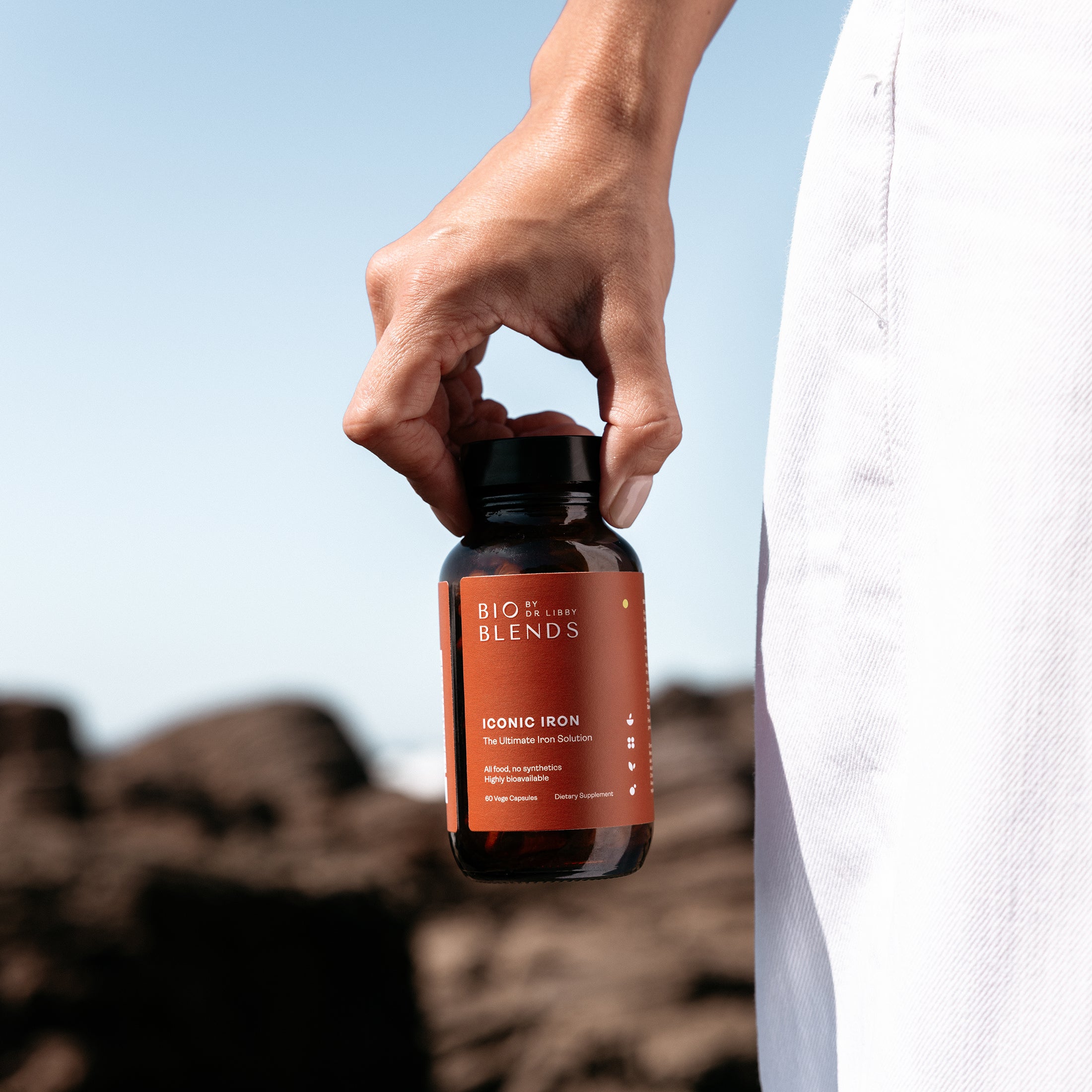
For many women I work with, low iron is quietly sitting beneath the fatigue. No amount of espresso can compensate for insufficient ferritin stores. If you feel like you’re living in a fog or your energy just isn’t yourself, it may be worth exploring that next. Because you deserve to feel energised from within, not just propped up from the outside.