

How much iron is in a child’s typical day of eating?
Iron can quietly become one of the easiest nutrients for children to fall short on, especially during busy stages of growth, fussy eating phases or those weeks where they seem to survive on crackers and air. Even children who appear to eat reasonably well can still fall short when it comes to iron intake – often without parents realising it at all. After all, a child needs more iron than an adult man! And often, the slide into deficiency happens slowly. A child may still appear energetic, active and healthy while their iron stores gradually become depleted over time.
Iron plays a major role in healthy growth, IQ and development. It supports:
- Brain development and learning
- Concentration and focus
- Energy production
- Immune health
- Growth and development
Yet despite how important it is, iron deficiency remains the most common nutrient deficiency globally. One of the biggest reasons? Many everyday kids’ meals contain far less iron than most parents realise.
A typical child’s day of eating
When you step back and look at an entire day of eating, it becomes easier to see how iron intake can unintentionally fall short.
A very normal day for many children might look something like this:
Breakfast
- Cereal with milk
- Toast with butter or spread
- A small glass of juice
Approximate iron intake: 1–2mg (remember too, that intake doesn’t equal absorption)
Some breakfast cereals are fortified with iron, but many children only eat small portions and absorption of fortified products is typically very low (it is a synthetic iron salt that’s added and absorption relies on a healthy gut (pH gradient and brush border) which for too many children today are slow to develop due to recurrent antibiotic use). Plus, milk-heavy breakfasts can fill little tummies quickly and the calcium in the milk blocks the absorption of the synthetic iron the cereal is fortified with. So even though there might be 1-2mg of iron in the breakfast, available iron for absorption will be close to zero.
Morning snack
- Crackers or a muesli bar
- Fruit
Approximate iron intake: less than 1mg
Most common snack foods are fairly low in iron, even the ones marketed as “healthy” or “natural”.
Lunch
- Half to a whole sandwich with cheese and chicken
- A few cucumber sticks
- Yoghurt
- Crackers or fruit
Approximate iron intake: around 1–2mg
This is a very typical lunch setup for kids – but lunches often lean heavily on dairy foods and refined carbohydrates, which don’t provide substantial amounts of – if any – iron. Plus there’s the calcium competing, with any iron that is there, for absorption again.
Afternoon snack
- Cheese and crackers
- Smoothie or milk drink
- Maybe some fruit
Approximate iron intake: less than 1mg
Again, dairy-heavy snacks can easily fill children up while unintentionally pushing iron-rich foods aside and blocking iron absorption (if any is present).
Dinner
- Small portion of pasta, nuggets or chicken
- A few vegetables
- Rice or bread
Approximate iron intake: around 2–3mg; highly dependent on the meal
Even dinner – usually the biggest meal of the day – may still fall short if portions are small, if red meat is rarely eaten or kids only nibble at what’s served.
The total may still be too low
Across the whole day, this style of eating may only provide around 5–7mg of iron in total — sometimes even less. Plus, other than the iron in red meat (if that’s part of dinner), most of the iron won’t be absorbed well or at all, due either to its non-haem nature or dairy foods being present at the same meal.
Children aged 4–8 years require 10mg of iron per day, every day, while younger children and teenagers often need more, particularly during periods of rapid growth or with the onset of menstruation in girls. Puberty is delayed in boys who are iron deficient.
And here’s more detail on an important part many people don’t realise:
Not all iron is absorbed equally.
Haem vs non-haem iron
Iron from animal foods – known as haem iron – is absorbed much more efficiently than non-haem iron from plant foods or fortified products.
Some of the best sources of haem iron include:
- Beef
- Lamb
- Organ meats
- Mussels
Plant foods can of course contribute iron too, but absorption tends to be much lower, as it is non-haem iron. Plus, other dietary factors compete with it for absorption or some block it entirely. Non-haem iron containing foods include:
- Beans and lentils
- Chia seeds
- Spinach, kale and other green leafy vegetables
- Nuts and seeds
- Eggs (even though they are from an animal, they only contain non-haem iron)
So even if a food label says it contains iron, the body may only absorb a small portion of it.
Why some children are more at risk of low iron
Some children are naturally more vulnerable to low iron intake than others.
This is especially common in children who:
- Eat very little or no red meat
- Fill up on dairy foods
- Prefer beige foods or snack-style eating
- Have limited appetites
- Graze throughout the day instead of eating full meals
- Are highly active or rapidly growing
- Follow vegetarian or vegan diets
- Have sensory sensitivities around food textures
Toddlers and younger children can be particularly vulnerable because appetites change constantly and food preferences can become very narrow very quickly. One week they love something, the next week they refuse it entirely. Parents know the drill. Just as an aside, this can be a double-edged sword when it comes to iron deficiency, as iron and appetite are so closely linked – iron deficiency leads to more picky eating and a diminished desire for iron-rich foods. This low iron intake allows the iron deficiency to continue. Zinc deficiency also needs to be considered in this scenario too, as zinc contributes significantly to how we experience both the taste and texture of food.
Signs your child may not be getting enough iron
Low iron can sometimes be difficult to spot early on because symptoms often develop gradually.
Some common signs may include:
- Fatigue or low energy
- Pale skin
- Dark circles under the eyes
- Visible blood vessel across the nose or on the temples
- Poor sleep
- Low concentration
- Irritability
- Frequent infections
- Reduced appetite
- Picky eating or a narrowing of food choices
- Headaches
- Behavioural changes
- Slower growth or development
- Breathlessness during activity
- Wanting to eat ice
- Eating non-food items such as soil, sand, paint flakes (infants)
Some children may show very few obvious symptoms until iron levels become significantly depleted. While occasional picky eating can be common in children, it’s worth speaking with your health care professional if you notice ongoing symptoms that could suggest low iron or nutritional concerns. A blood test may be recommended to properly assess iron status or a paediatrician or nutritionist may use a checklist of symptoms to make their assessment.
How to help your child get more iron
The good news is that small, consistent changes can make a meaningful difference over time. And it doesn’t need to be perfect.
Include iron-rich foods regularly
Rather than relying on one “healthy” meal, it can help to include iron-containing foods consistently across the day.
Some practical ideas include:
- Adding beef or lamb to pasta, tacos or burgers
- Including eggs, dried seaweed flakes, beans or lentils in meals
- Adding spinach or kale into smoothies or sauces
- Choosing iron-containing snacks like a boiled egg or carrots dipped in pate.
Even small amounts regularly can help support iron intake over time.
Avoid excessive milk intake
Children who drink large amounts of cow’s milk often feel too full to eat iron-rich foods. Calcium can also interfere with iron absorption when consumed with meals.
For many children, simply reducing excessive milk intake can help improve their appetite for a wider variety of nutrient-dense foods.
What about iron supplements?
For some children, food alone may not be enough – particularly during periods of rapid growth, fussy eating or if they’ve been diagnosed with iron deficiency. This is where supplementation can and often needs to play a supportive role.
Iron supplements may be recommended for children who:
- Were born to mothers who were iron deficient during pregnancy or were born prematurely, if their iron status has not been addressed (their iron deficiency from infancy may have continued into childhood)
- Have confirmed low iron or iron deficiency anaemia
- Eat a limited range of foods
- Refuse most iron-rich foods
- Have increased iron requirements
- Follow vegetarian or vegan diets or eat limited or no red meat
Old-school, conventional supplements are typically made from iron salts that often cause gut symptoms, most often constipation. Thankfully, these days, there are higher quality options.
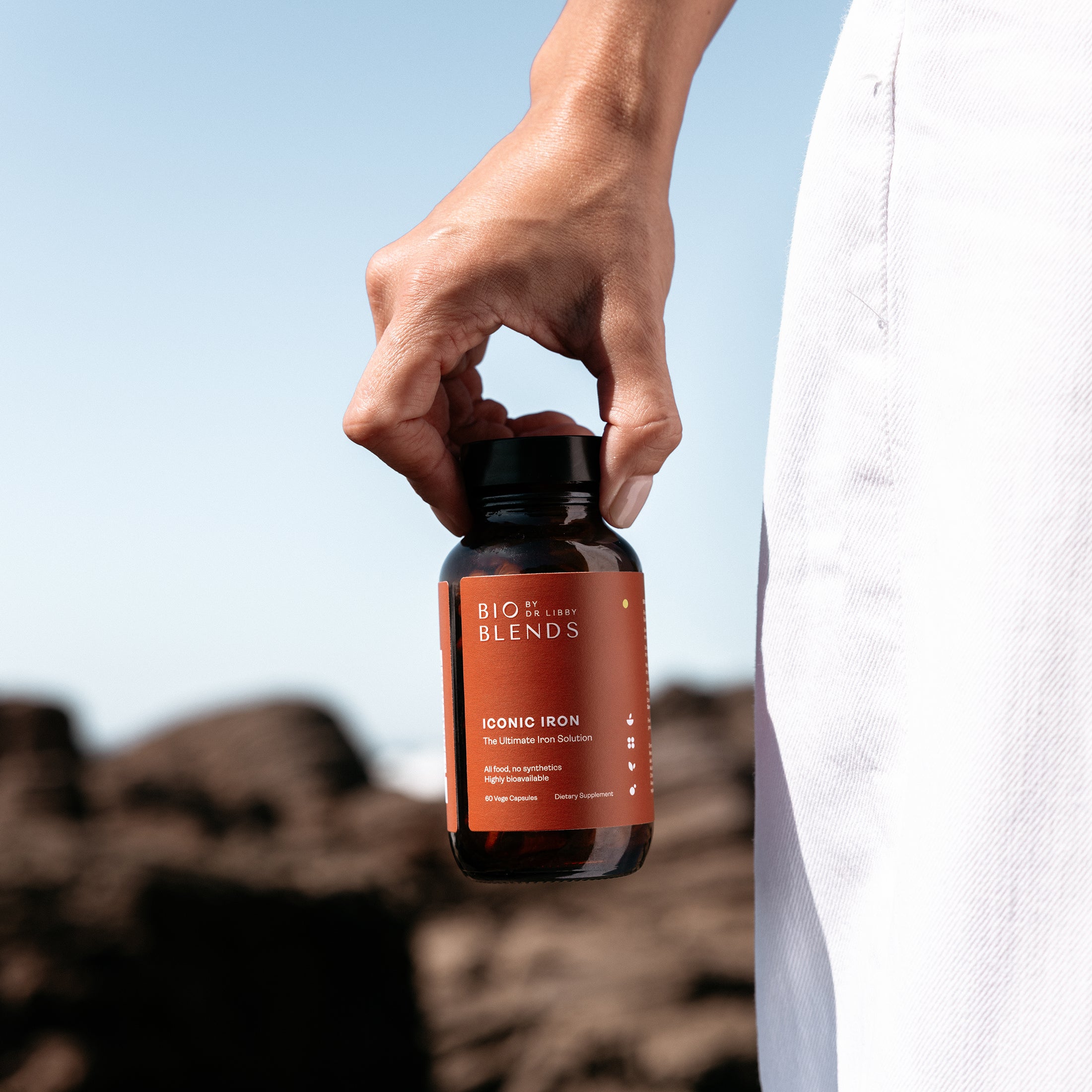
Iconic Iron is designed with children in mind, helping support healthy iron levels without the common gut-related challenges associated with conventional iron supplements. It contains ferritin-iron, a ground-breaking form of iron, sourced from organic peas. Ferritin-iron is not non-haem iron, even though both of these forms of iron are found in peas. The best way to imagine ferritin-iron is like lots of little iron atoms inside a cage – the cage is the protective ferritin shell. Its structure means it has a unique absorption mechanism that bypasses the usual iron absorption hurdles, competitors and disruptors, so it’s no wonder parents write to us about their children’s iron status and iron deficiency symptoms improving with Iconic Iron.
Ferritin-iron is highly bioavailable, well absorbed and gentle on little and big stomachs alike. The Iconic Iron vege capsules can be easily added to daily routines, and for children who aren’t yet able to swallow capsules, they open easily and the contents can be mixed into food and drinks. Importantly, consistency matters. Rebuilding iron stores can take time – often several weeks or months.