



Rest isn’t always enough: how to actually restore your energy
You’re doing what you’ve been told should help. You’re slowing down, going to bed earlier, trying to take a break when you can (although that feels impossible, a lot). And yet, your energy doesn’t really shift. That can feel confusing – even a little disheartening. What I want you to know is this: there’s nothing wrong with you. It’s just that rest and restoration are not the same thing.
You can be still – and often, your body truly needs that. But depending on what’s happening in your biochemistry, it may still be running on high alert in the background, or simply not have enough of what it needs to fully restore.
→ You can sleep, but not deeply enough for real repair to happen.
→ You can take time out, but still be depleted at a cellular level.
Because energy isn’t something we simply “get back” from resting, it’s something your body has to create. And it can only do that when it has the right ingredients, the right signals and the space to actually repair. It’s not complicated. It’s all based on key health foundations that seem to have become lost in all of the noise.
Rest reduces demand, restoration rebuilds supply
Rest is incredibly important – it gives your body a break from output. And this piece in itself is one many people struggle with. But what if you’re resting and still not feeling ‘well rested’?
From a physiological perspective, your body restores energy when three key systems are supported: your biochemistry, your nervous system and the daily inputs that shape your rhythm. If any of these are lacking, rest can feel like a pause rather than a reset.
If you rest and still feel exhausted, there are a few common patterns behind this.
1. Your body doesn’t have the raw materials it needs
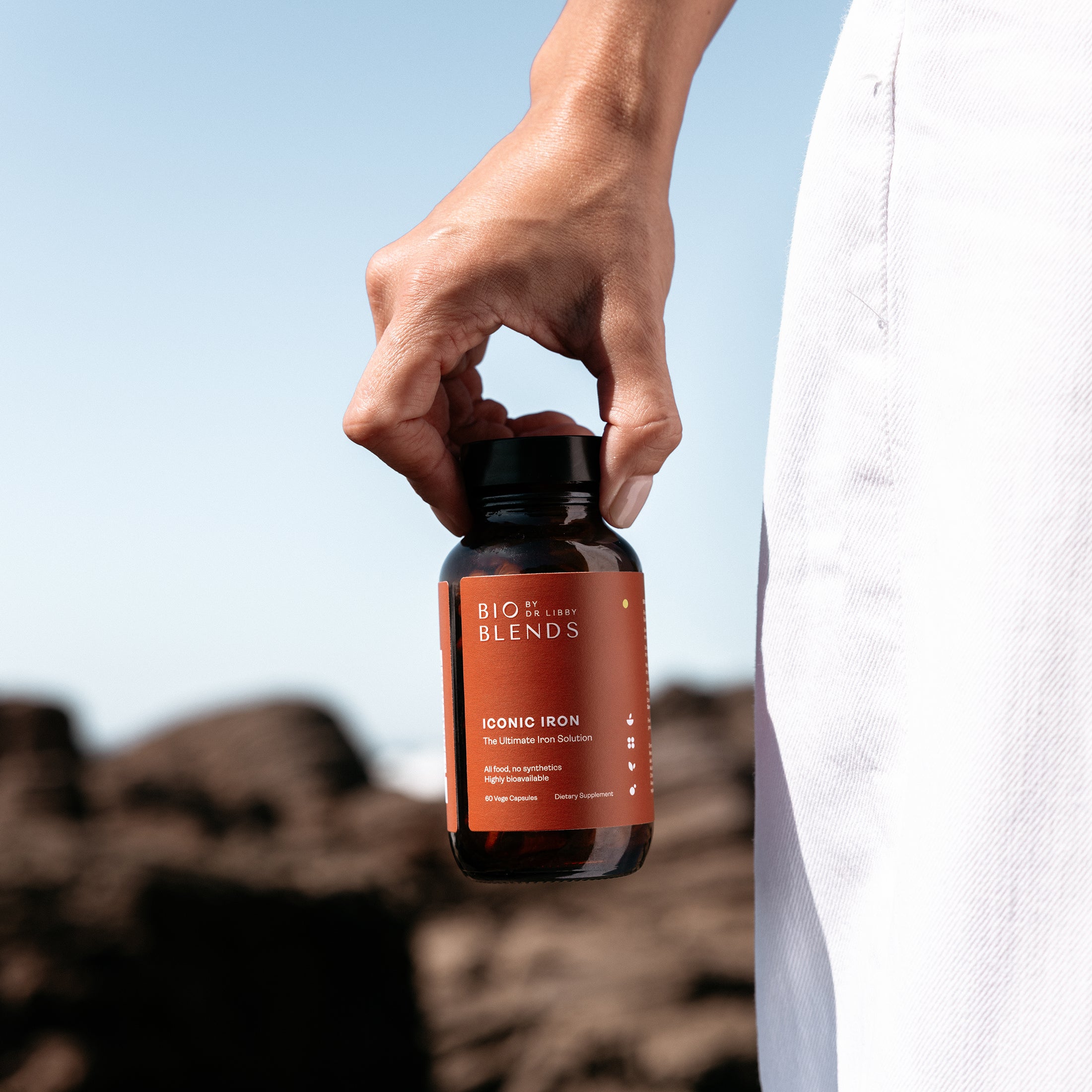
This is one of the most overlooked pieces. Your body creates energy at a cellular level, and that process depends on specific nutrients. Without enough of them, it doesn’t matter how early you go to bed or how much you slow down, your energy can still feel flat. Low iron is the most common. It plays a direct role in oxygen transport and mitochondrial function, both of which are fundamental to energy production. When iron levels are inadequate, it’s common to feel that deep, persistent fatigue that rest alone doesn’t shift. Replenishing your levels can make such a noticeable difference. A food-sourced option like Iconic Iron can help restore iron levels without the digestive discomfort many people experience with traditional iron supplements.
Zinc is another mineral that’s important and is often missed. Zinc is involved in hundreds of enzymatic reactions in the body, many of which relate to energy production, immune function and how well you recover. It also plays a role in supporting stable blood sugar and healthy hormone production, both of which influence how steady your energy feels across the day. Organic Zinc offers a food-sourced, gentle, bioavailable way to support your zinc levels, helping to underpin energy production and overall resilience.
And something like Organic Daily Greens & Reds can be a simple way to consistently bring in a broader spectrum of plant-derived nutrients, especially if your vegetable intake is falling short of the recommended five serves per day, helping to support your energy more holistically.
2. Your nervous system is perpetually switched on
You can be lying down, scrolling, watching something, even sleeping… and still be in a subtly (or sometimes not so subtly!) activated state. Your body is incredibly intelligent. If it doesn’t feel safe, it won’t prioritise repair. Instead, it stays alert. Slightly on edge. Ready. Over time, this becomes your baseline, and it’s often why you can feel tired, but wired at the same time.
Supporting your nervous system is less about doing more, and more about creating moments where your body can truly exhale. Sometimes that’s as simple as a few minutes of slow breathing, or stepping outside into nature without your phone. And sometimes, it’s helpful to have a little extra support. Calm Restore is designed to gently ease that internal tension, while nutrients like magnesium, found in Organic Magnesium, play an important role in helping the nervous system settle and supporting deeper sleep. When your body feels safe enough, that’s when restoration can begin.
3. Your body has lost its rhythm
Your body runs on patterns. Light in the morning, food provision, movement, rest. These cues help regulate everything from your hormones to your sleep-wake cycle to your energy. When those cues become inconsistent, your body can feel a little out of sync. And that often shows up as fatigue that doesn’t fully resolve, no matter how much you rest. Sometimes the most powerful shifts are also the simplest. Getting outside in the morning light. Eating a nourishing breakfast instead of just having coffee. Getting to bed around the same time each night. Creating a more consistent rhythm to your day. They seem small, but they send very clear and helpful messages to your body.
4. Your blood sugar swings wildly
This is another piece that can quietly drain your energy. If you’re skipping meals, relying on caffeine, or eating in a way that causes big spikes and dips in blood glucose, your body is constantly working to bring things back into homeostasis. And that work costs energy.
It often shows up as that mid-afternoon crash. The cravings. The feeling of needing something just to get through. Stabilising blood sugar doesn’t have to be complicated. It can look like reducing ultra-processed foods, eating more whole real foods consistently, building meals around protein, nourishing fats and fibre (particularly plenty of vegetables), and noticing how your body responds.
For many people, adding something like Organic Daily Greens & Reds into their day also helps take the edge off those cravings and supports more steady energy, while Organic Zinc can provide more targeted support where levels may be depleted.
When energy is low, everything feels harder – including taking any steps to recoup that energy. So start small and remember you don’t need to overhaul everything at once. You might begin with your breakfast, or by stepping outside in the morning to observe the light – or by supporting something you know has been low for a while, like your iron, zinc or magnesium.
Choose one place to begin, and let that be enough for now. Because restoration isn’t something you force, it’s something you create the conditions for. And when those conditions are there, your body knows exactly what to do.



.%20And%20yet,%20your%20energy%20doesn%E2%80%99t%20...)